Prepare the starter – Pour warm water into a bowl, add the yeast and sugar. Mix and set aside for 10 minutes until the starter begins to work.
Kneading the dough – Add the flour and salt, add the oil, and knead the dough for about 8–10 minutes, until elastic.
First rising – Cover the bowl with a cloth and set aside in a warm place for 1 hour.
Shaping the bread – After rising, transfer the dough to a work surface and shape it into a ball or oblong loaf.
Second rising – Cover and let it rise for another 15–20 minutes.
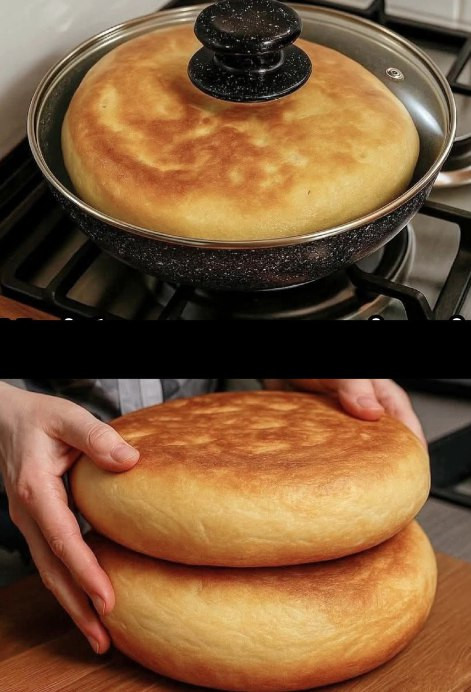
Pan-baking – Preheat a heavy-bottomed pan (preferably cast iron). Place the dough in the pan, cover with a lid, and bake over low heat for about 25 minutes on one side. Then flip and bake for another 20 minutes, until the bread is golden brown and cooked through.
Serving and storage tips:
Best served slightly warm, served with butter or homemade spread.
Store the bread wrapped in a cotton cloth – it will stay fresh for up to 2 days.
If you like, you can reheat the slices in a dry pan – they will be crispy again.
Variations:
Whole-grain bread – replace half the wheat flour with whole-wheat flour.
Herbal – add dried oregano, thyme, or rosemary to the dough.
With additions – you can enrich the bread with sunflower seeds, pumpkin seeds, or flax seeds.
Gluten-free – prepare a version with a gluten-free flour blend and add a teaspoon of psyllium husk for a better texture.
FAQ:
1. Does pan-fried bread taste like oven-baked bread?
Yes, although it has a slightly different character – it’s more moist inside, and the crust is more tender but still crispy.
2. Can I use a non-stick pan instead of a cast-iron pan?
Yes, but it’s best to bake it on very low heat to avoid burning.
3. How long does the bread stay fresh?
It tastes best the day it’s made and the next day. Then, you can refresh it in a toaster or in a dry pan.
4. Can you make this bread without yeast?
Yes, you can use baking powder (about 2 teaspoons), but the bread will have a more pancake-like consistency than traditional bread.