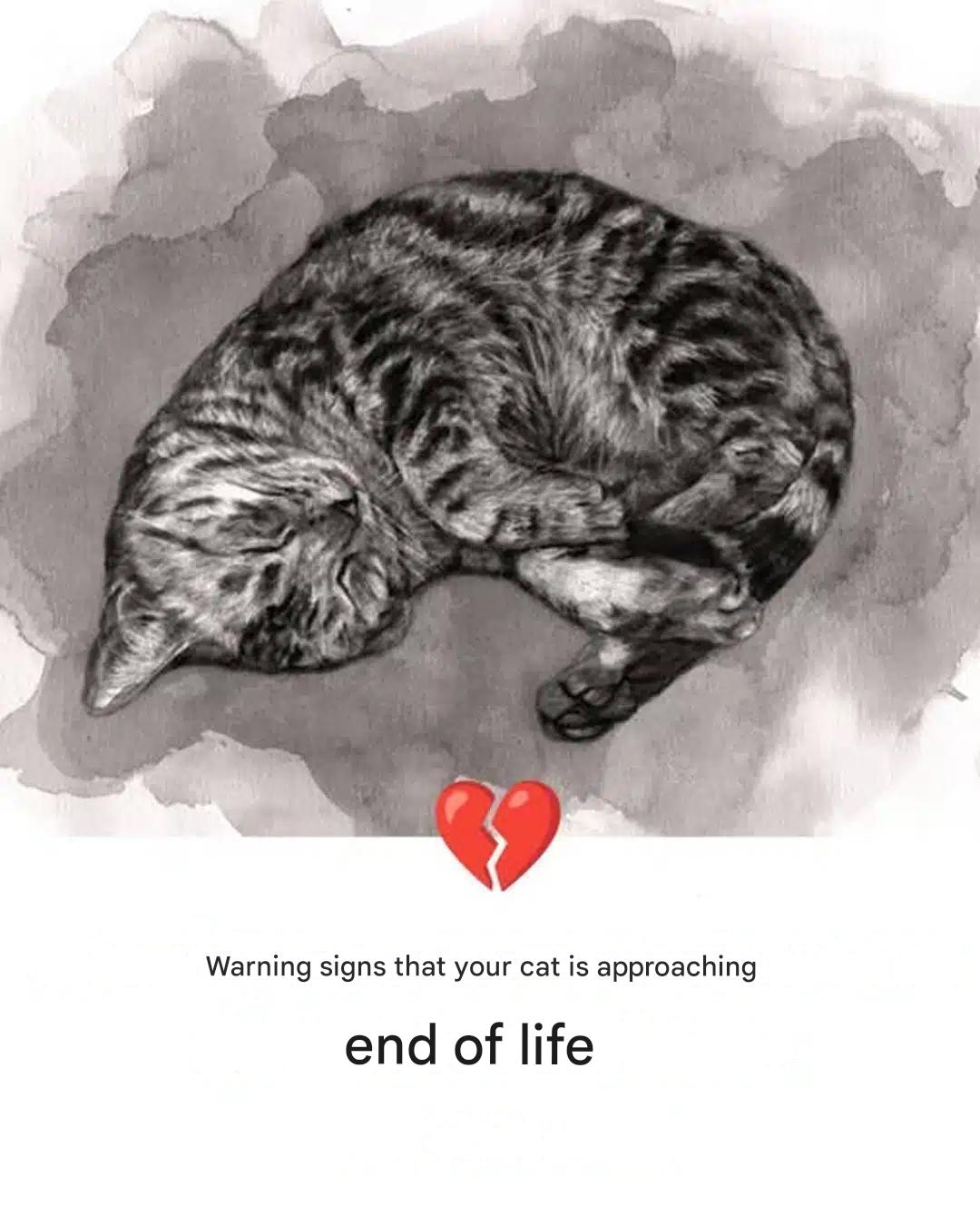
If your cat has difficulty walking, jumping, or climbing in places they used to, it may be a sign of general weakness. Difficulty moving often accompanies muscle or joint pain, especially in older cats.
Behavioral Changes: More Attached or More Detached
Some cats suddenly become more affectionate and constantly seek contact with their owner, as if seeking comfort. Others, however, are more detached and prefer to be left alone. These behavioral changes can be important clues about your companion’s emotional and physical state.
Nausea, Vomiting, and Indigestion
Digestive problems such as vomiting, diarrhea, or even constipation can indicate internal organ failure. Watch for these signs and ensure your cat has constant access to clean water.
Body Temperature Changes
A cat nearing the end of its life may experience abnormal fluctuations in body temperature. If your cat is too cold or too hot to the touch, it may be a sign that their body is starting to weaken. A cat’s normal temperature is between 38 and 39.3 degrees Celsius (100.4 and 103.5 degrees Fahrenheit).
When should you see a veterinarian?
If you notice any of these symptoms in your cat, it’s important to consult a veterinarian to assess their health. Although the prognosis is difficult, understanding what your cat is going through will allow you to say goodbye with love and dignity.
How to ensure a peaceful end to your cat’s life?
The most important thing is to provide comfort, safety, and warmth. Create a calm and quiet space for your cat, away from noise and commotion. Be there for them, listening to their needs, even if it means just sitting quietly by their side. Your love and support are the greatest gifts you can give them right now.